Title: The Indoor Cat Calorie Mistake Every New Cat Parent Makes Slug: indoor-cat-calorie-mistake-2026 Date: 2026-08-01 Domain: catcalorietool.org
The Indoor Cat Calorie Mistake Every New Cat Parent Makes
Olivia Brennan
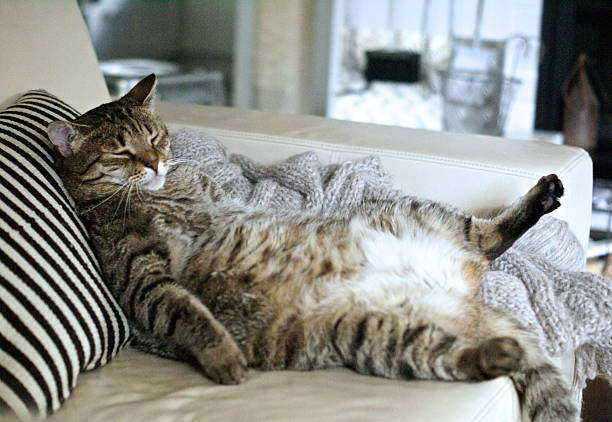
I made this mistake with Milo. I will admit it upfront because pretending I did not would make me a hypocrite, and I have enough flaws without adding hypocrisy to the list. When I adopted Milo — seven years ago, a chubby tabby with the metabolism of a sloth and the appetite of a golden retriever — I looked at the back of the food bag, saw the feeding chart, and thought: well, that seems straightforward.
It was not straightforward. It was a disaster wrapped in kibble.
The bag said a 12-pound indoor cat should eat roughly 250 calories a day. Milo was 12.4 pounds. I did the math. I measured the cup. I poured exactly one cup of dry food into his bowl every morning and called it done. He gained two pounds in four months. I cried at his vet weigh-in. I am a veterinary nutritionist. I have a master's degree in this. And I still fell for the oldest trap in feline nutrition: trusting the bag.
Here is the thing. Those feeding charts are not lies. They are averages. And averages, in nutrition, are dangerous. A 12-pound indoor cat does not need 250 calories. A 12-pound indoor cat who sleeps 18 hours a day, walks to the food bowl and back, and considers chasing a laser pointer a cardio session might need 180. Maybe 190. The bag does not know your cat. The bag does not know that Milo considers the windowsill his primary habitat and the litter box his only daily commute.
A 2024 study from the University of Cambridge found that indoor cats on ad libitum dry food diets consume an average of 30% more calories than their actual maintenance requirement. Thirty percent. That is not a rounding error. That is obesity in a year. I see it in my practice every week. Cat parents who say, "But I am feeding exactly what the bag says," and I have to gently explain that the bag is talking about a theoretical cat, not their theoretical cat who has not left the couch since the Obama administration.
Luna was different. Luna is my Siamese mix, four years old, picky as hell, and somehow still manages to hover at exactly her ideal weight despite eating like a bird with commitment issues. Why? Because she self-regulates. Milo does not self-regulate. Milo would eat until the bag was empty and then ask for a refill. Some cats are internal regulators. Some cats are external vacuum cleaners. You have to know which one you have before you trust any chart.
The real mistake new cat parents make is not overfeeding. It is assuming that a cup is a cup is a cup. A measuring cup of dry food is not a standardized unit. Density varies by brand. Kibble size varies. Calorie density varies wildly — some dry foods pack 450 calories per cup, others pack 350. If you switch brands and keep pouring the same cup, you have just changed your cat's intake by 20% without knowing it. I did this. I switched Milo from a 380-calorie-per-cup food to a 460-calorie-per-cup "premium" brand and kept pouring one cup. He gained a pound in six weeks. I was furious. At myself. At the bag. At the word "premium," which apparently means "more calories in the same volume."
So here is what actually works. Weigh the food. Not with a measuring cup. With a kitchen scale. Grams do not lie. Cups lie. If your cat needs 180 calories and your food is 4.2 calories per gram, that is 43 grams. Weigh it. Every day. It takes ten seconds and it will save you a year of weight-loss misery. I weigh Milo's food every morning at 7:15 AM while my coffee brews. It is a ritual now. Forty-three grams in the bowl. No more. No less. He has been at his target weight for eight months.
The second mistake is free-feeding. I know. I know. It is convenient. You fill the bowl, you leave for work, the cat grazes all day, everyone is happy. Except the cat is not grazing. The cat is eating. All day. Because the food is there. Because cats are opportunistic feeders, not natural grazers, and if you give them an infinite buffet they will treat it like one. A 2023 study in the Journal of Feline Medicine and Surgery showed that cats fed on a schedule consume 15-20% fewer calories than free-fed cats, even when the total amount offered is identical. The simple act of removing the bowl between meals changes their behavior.
I switched Milo to two scheduled meals a day. Breakfast at 7:30 AM, dinner at 6:30 PM. Nothing in between. No bowl on the floor. No "just in case" top-offs. The first week, he yowled at 3 PM like I was starving him to death. The second week, he adjusted. The third week, he stopped begging. His body learned the rhythm. His metabolism learned to expect fuel at specific times instead of constant low-grade intake. And honestly? His energy improved. He started actually playing with toys instead of just watching them.
The third mistake — and this one kills me — is treats. Treats are invisible calories. They do not count in your head because they are small and cute and your cat loves them. But ten treats a day at 2 calories each is 20 calories. That is 10% of Milo's daily budget. Twenty treats is 20%. I have had clients who feed fifty treats a day and wonder why their cat is overweight. The math is not complicated. The denial is.
I use the Treat Calorie Budget now. I log Milo's treats. He gets exactly three a day, totaling 6 calories, and I subtract that from his meal allocation. It sounds obsessive. It is obsessive. But it is also the reason he is healthy. The Body Condition Score Checker keeps me honest. I score him every two weeks. Five out of nine. Ribs palpable with slight fat cover. Waist visible from above. That is the goal. That is what I am protecting with my kitchen scale and my scheduled meals and my three-treat limit.
If you are a new cat parent, here is my honest advice. Do not trust the bag. Do not trust your eyes. Do not trust your cat's begging face, which has been evolutionarily perfected to manipulate you. Trust the scale. Trust the calculator. Trust the schedule. And trust me when I say that a slightly hungry cat is healthier than an overfed one. Milo proved it. I proved it. And if I can do it — me, the person who cried at a vet weigh-in — you can do it too.
What is your cat's actual daily need? Not the bag's guess. The real number. Find it. Weigh it. Feed it. And then watch your cat thrive instead of just survive on the couch.